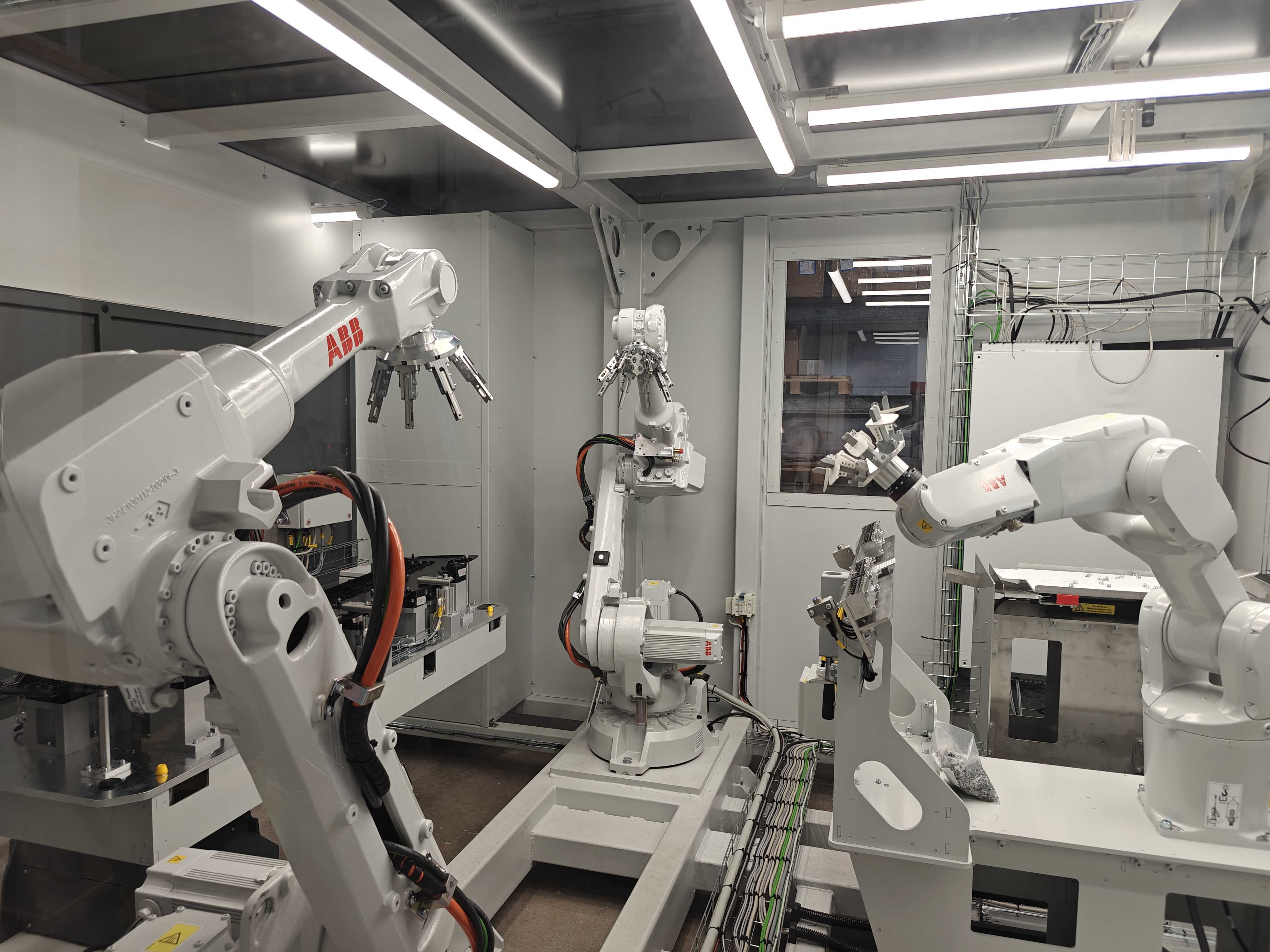
There is a certain kind of discipline required to build anything a thousand times. Not the repetition of manufacture, but the cumulative refinement of a system through real deployments, real adjustments, and real industrial environments that forgive very little. Here at Tordivel, approaching build milestone #1000 is not just a great marketing anniversary, but evidence that a platform has been stress-tested against the most demanding conditions that modern production can impose.
That context matters, because robot vision is a field littered with promising technology that stalls at the threshold between laboratory performance and factory-floor reliability. Our trajectory tells a different story.
From Prototype to Production: What a Track Record Actually Means
We supply advanced 3D robot vision systems to leading automotive manufacturers across Norway, Sweden, Poland, and the United Kingdom. These are not pilot projects or proof-of-concept installations. They are production-ready systems, running in facilities where downtime has a measurable cost and where the tolerance for imprecision is effectively zero.
What this means in practice is that every iteration of Scorpion Vision has been shaped by the kind of operational feedback that only comes from live deployment. The platform has had to contend with variable lighting, changing part geometries, demanding cycle times, and the broader integration challenges of fitting a vision system into an existing automation cell without disrupting the workflow around it. Each build adds to a body of knowledge that purely R&D-driven development cannot replicate.
The result is a platform with genuine depth, not just in its feature set, but in the engineering judgement embedded in its architecture. When a system has been deployed and refined across a thousand builds, the difference shows in the details: in how it handles edge cases, in how it communicates with robot controllers, in how it behaves when conditions drift from the ideal.
The Shift Toward Prompt-Driven Vision
Against that foundation of proven capability, we are preparing to introduce Scorpion Vision AI, a development that represents a meaningful shift in how vision software is configured, adapted, and operated.
Traditional machine vision software has typically followed a structured, plug-and-play model: tools are selected, parameters are set, and the system is trained against a defined set of conditions. This approach works well when the application is stable and the requirements are clearly bounded. Its limitation becomes apparent when conditions change, when new part variants are introduced, or when operators need to make rapid adjustments without specialist programming knowledge.
Scorpion Vision AI moves toward a prompt-driven paradigm, a model in which the system can be directed through natural, flexible instruction rather than through rigid configuration sequences. The practical implication is significant. Rather than requiring a vision engineer to intervene every time an application needs to adapt, the system becomes more responsive to the people operating it. Adjustments that previously demanded hours of reconfiguration become a matter of directed interaction.
At its core, Scorpion Vision AI retains the measurement accuracy and 3D capability that industrial applications demand. What changes is the interface between human intent and system behaviour, and in a production environment, that interface is often the single greatest source of friction.
RVT Automation: Where the Technology Meets the Application
Understanding what Scorpion Vision can deliver in practice requires looking at how it is applied by the integrators and OEM partners who deploy it in the field. RVT Automation, based in Sweden, is one of several trusted Scorpion OEM partners bringing the technology into demanding industrial environments.
Partners of this kind play a critical role in the value chain of any vision platform. A software framework, however capable, only delivers measurable results when it is deployed by integrators who understand both the technology and the specific demands of the application. RVT Automation operates at precisely that intersection, combining the depth of Scorpion's vision capabilities with the application knowledge required to make those capabilities count in a live production setting.
The relationship between platform developer and integration partner is one that many technology suppliers underestimate. Tordivel's OEM model distributes expertise rather than centralising it, which means the technology reaches a broader range of industrial applications and benefits from the accumulated field experience of multiple specialist organisations. Each partner brings sector-specific insight that feeds, in turn, back into the platform's continued development.
Precision, Scalability, and What Comes Next
The significance of build #1000 is partly symbolic, but it is grounded in something real. A vision platform that has reached this point has been validated not by internal testing alone, but by the cumulative judgement of engineers, integrators, and operators who have staked production performance on its reliability. That is a form of validation that specification sheets cannot replicate.
The introduction of Scorpion Vision AI adds a new dimension to that foundation. By enabling more flexible, prompt-driven interaction with vision systems, it addresses one of the persistent friction points in industrial automation: the gap between what a system is capable of and what operators can practically configure and control without specialist intervention. Closing that gap does not make the technology simpler in any superficial sense, it makes it more accessible without sacrificing the precision that industrial applications require.
For engineers and technical decision-makers evaluating 3D robot vision solutions, the combination is worth attention. A platform with a proven deployment history, an established OEM partner network, and a clear development roadmap that addresses real operational constraints is a relatively rare proposition.
The next thousand builds will be shaped by a different set of possibilities. What remains constant is the underlying commitment to solutions that perform reliably where reliability is non-negotiable, on the factory floor, in production, where the technology simply has to work.
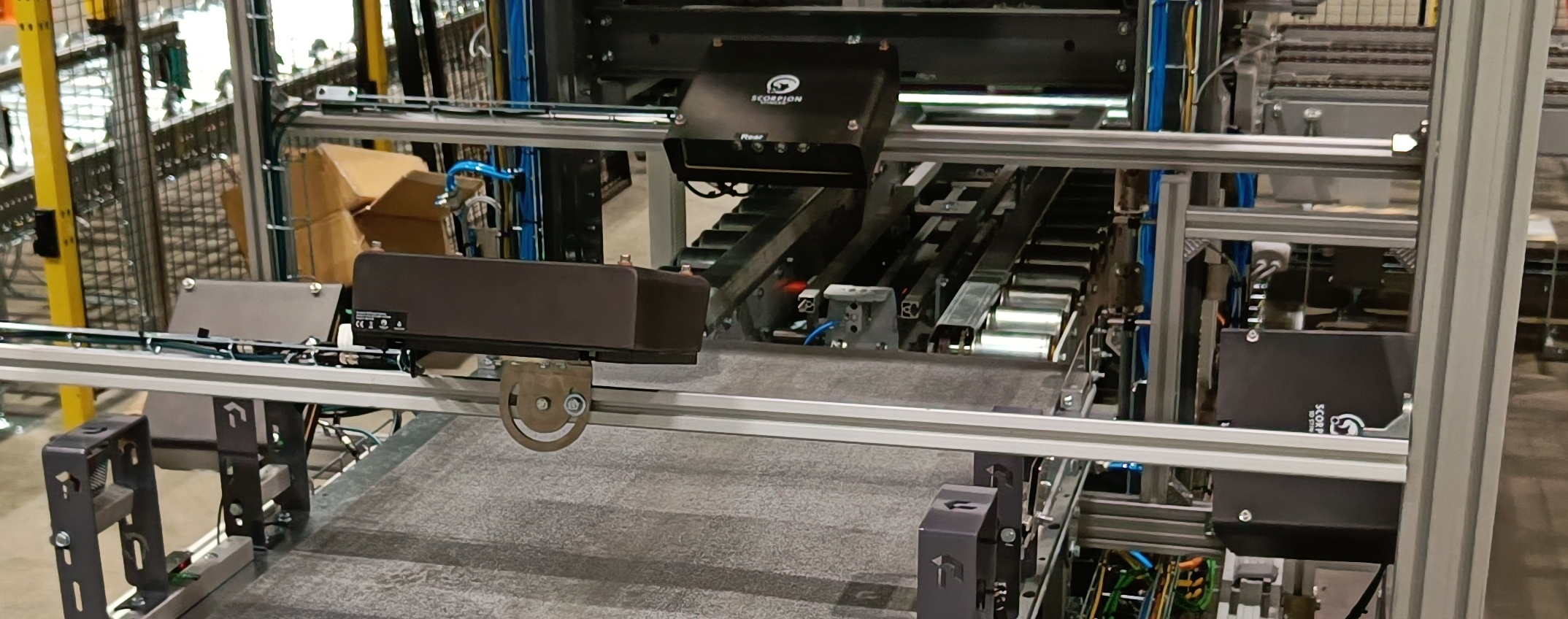
Scorpion 3D Stinger™ in factory